Author: craig-spence@shaw.ca

  • The Art of the Steal

    Shake hands with the Lizard Man
    To understand the motives and behaviours of Lizard Man, you must fully appreciate the differences between strength and power, a distinction he is utterly incapable of.

    Strong leaders persevere, balancing their decisions and actions between a set of firmly held moral, ethical, and civic principles, exercised in a complex, often antagonistic world; power-mongers crave more power and use any and every means at their disposal to bend circumstances and the wills of others to their narcissistic, aggrandizing obsessions.

    Lizard Man is amoral (at best), unethical, inhumane, self-serving, untrustworthy, unpredictable, and rapacious—there aren’t really words to describe the depths of depravity and duplicity he is willing to deploy. Everything he does is intended to increase his bargaining position by undermining the stature. status, and even the well-being of his enemies—and he perceives anyone on the other side of a table as an enemy.

    A deal brokered by a strong leader—as opposed to a strongman—is a commitment signed between his nation and another to a set of obligations that are mutually beneficial. It is not a personal achievement that he or she brags about; rather, it is an informed undertaking made in the interests of the citizens he represents, and recognizing the hopes and dreams of peoples represented by other partners to the agreement.

    Strength endures and leads to lasting relationships between nations; power is always in flux, and results in unstable, often abruptly and violently abrogated ‘deals’.

    You haven’t met him yet in Points of Departure, but the Lizard Man is slithering around impatiently in the wings, waiting for his opportunity. Beware! Don’t allow yourself to be tricked into shaking hands with the devil.
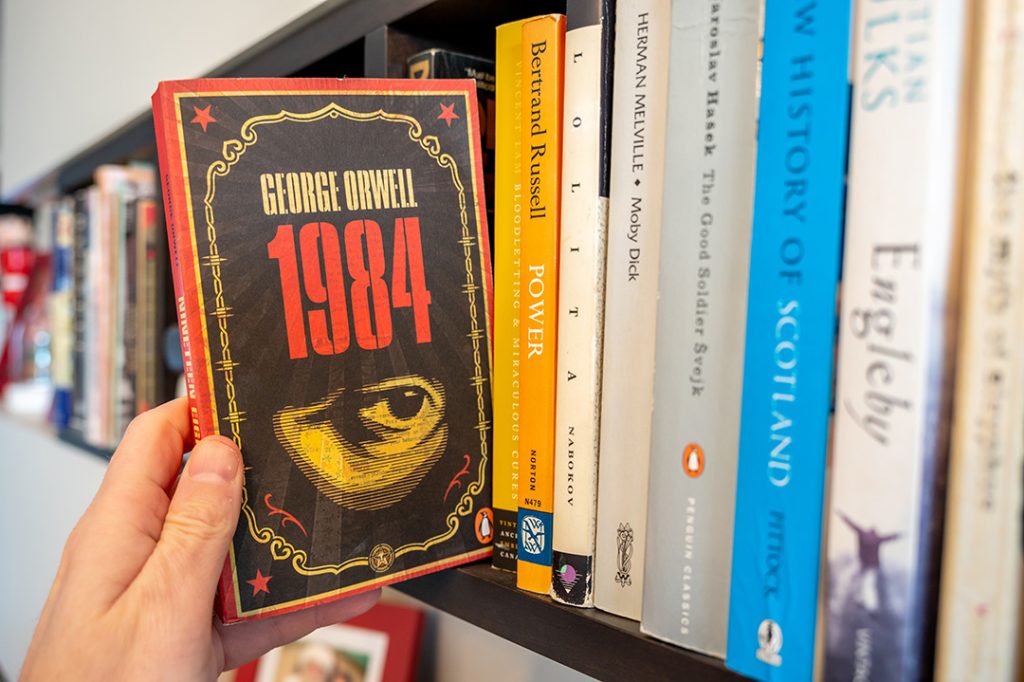

  • 1984 + 42

    Is Big Brother in the making with 21st century spyware + Artificial Intelligence? Jayclyn thinks so, and she wrote a song, Gathering Intelligence, to forewarn us about it…

    Points of Departure is a comedic drama underscored by a very serious reality: We are entering an era when the ability of states to monitor and control citizens is almost absolute.

    Two technological developments make this dystopian prediction more than likely: the ability of covert systems to spy on every conceivable activity a citizen might engage in; and the voracious appetite of artificial intelligence for data to digest, analyze, report, and respond to.

    Unauthorized, background monitoring of our conversations and locations is already happening. Scenario: You’re grabbing a coffee and a piece of toast before you dash out the door for work. You and your partner have a brief conversation about needing to get a new car soon. By lunch, your social media platforms are pushing ads from car dealerships and manufacturers.

    An unpleasant intrusion, perhaps, but a harbinger of even more disturbing potentials that will almost certainly be realized.

    Ask yourself: Why are corporations and governments spending billions on huge data centres that can store and sift through vast amounts of information? What kind of persuasive and pervasive power will those facilities give them?

    In Points of Departure’s Episode 8, The Grand Union Cafe, Jayclyn picks up a guitar and does an impromptu performance of her folksy song Gathering Intelligence. It’s a signal to readers that there’s an existential undercurrent to the novel.

    Jayclyn knows more than she should about the morals and motives of the Lizard Man, who will be introduced later in the story, and his inner cabal. She’s on the run and knows it’s going to get harder and harder to evade the omniscient powers of spyware and artificial intelligence they control.

  • Albert: Alt-right, left, right…

    Why are extreme right-wing groups like Second Sons Canada gaining prominence and membership in so many countries?

    One of the characters in Points of Departure, Albert, is a white supremacist. I want to understand the mindset of men who espouse racism, fascism, and violence, and join organizations that celebrate those traits with events like a ‘Bigotfest’ being promoted in Sudbury, Ontario. Men who militate for policies like ‘remigration,’ which seem so at odds with what it means to be a multicultural Canadian.

    I’m trying to see the world from their point of view and understand the social pressures that have resulted in these movements gaining so much momentum and influence in the 21st century.

    Have a look at this photo, which appeared in a June 23, 2026 CBC item on the Second Sons…

    My first impulse was mockery. So what? A dozen black shirts, marching in a crosswalk through downtown Sudbury. Who cares?

    We all should.

    Bravery is a precursor of heroism. Imagine yourself in that small corps of marchers, behind one of their masks. It takes courage to stand up for what you believe when most would be afraid to show their true alt-right colours and wave their flags.

    Why the masks, then? I have to ask. And how does covering their faces connect these marchers to official thugs like the forces of ICE in the United States?

    Some of these marchers have families to protect and jobs to go to. So showing your colours while hiding your face might be considered a reasonable precaution.

    But there’s a deeper significance to the masks. These men believe they are standing up and risking their lives in a war to overthrow an evil empire, and that showing their faces would expose them to retribution from the powers that be—especially when the day comes that they must confront the enemy through the acts of iconoclastic violence they are training for.

    They see themselves as soldiers who have donned the uniform of legitimate rebellion to save their nation in an undeclared war that is emasculating and eviscerating their testosterone culture. They are heroes in their own minds. Heroism defines them.

    But a hero needs an enemy, and the darker, more evil, more dangerous and sinister that enemy is portrayed, the greater the heroism involved in defeating it. Hence the proliferation of conspiracy theories propounded by influencers who bring into question the motives and the methods of the ‘establishment’.

    Albert is motivated by and vested in this kind of thinking. So when he is bested in a violent encounter by another character in the novel—a woke woman no less—his violent disposition becomes focused and personal. He wants revenge; Colin and Jayclyn become the targets of his rage.